Special project for ArtVerona at Rondella delle Boccare.
Shoort text.
The project, curated by Thomas Ba, investigated the relationship between body and urban landscape—two distinct yet deeply connected elements. Students from the Marco Polo Institute, with artists Lorena Bucur and Davide Zulli, reflected on their experience of urban landscapes to produce two artworks that were installed in the historical site of the Rondella delle Boccare. The objective was to put in dialogue individual and collective perspectives with memory and mainstream narrations.
Autogeografie was realized in collaboration with the Ufficio Conservazione e Valorizzazione Sito UNESCO e Cinta Muraria and @istitutomarcopolovr.
All text by Thomas Ba
Photos by Lorena Bucur
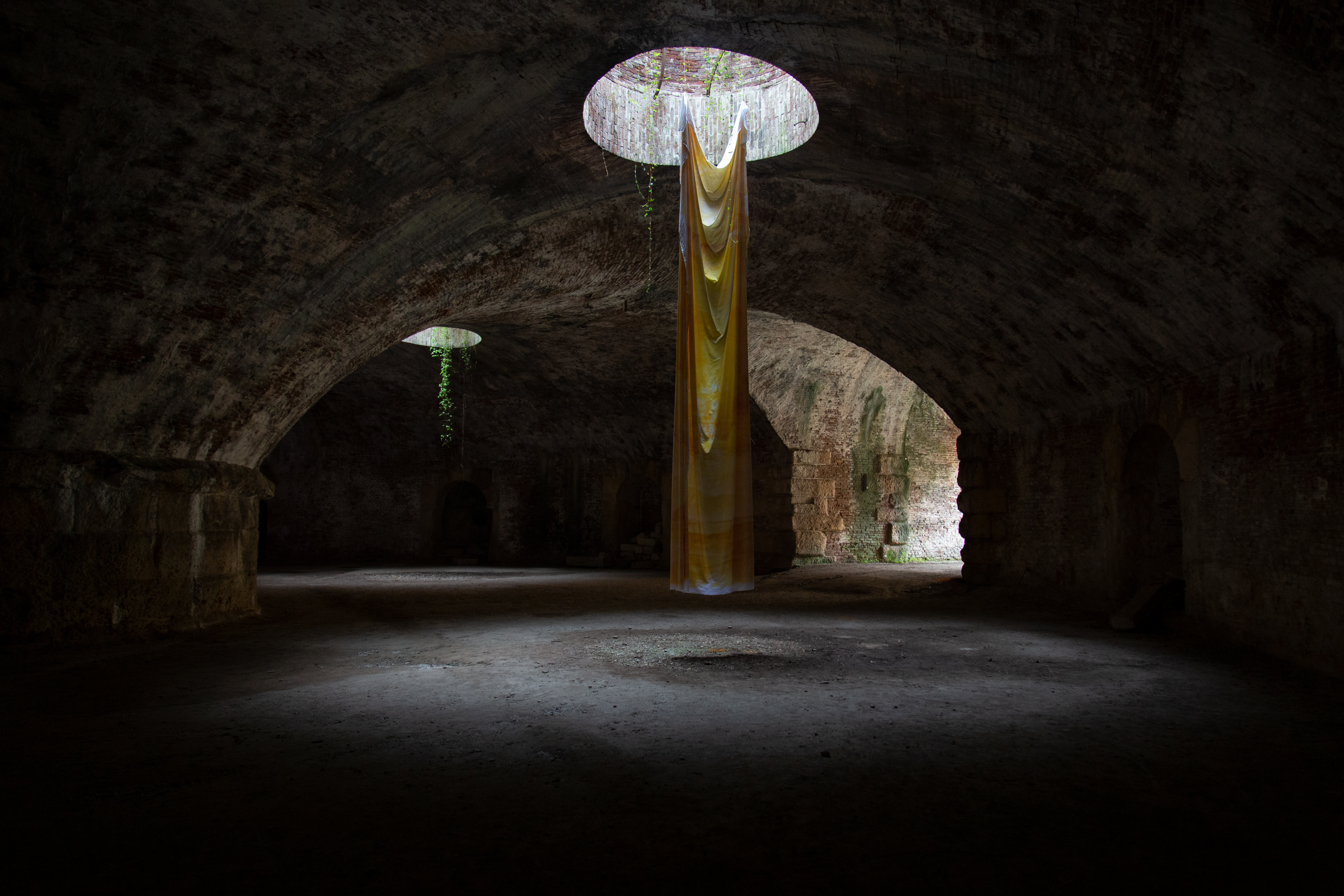
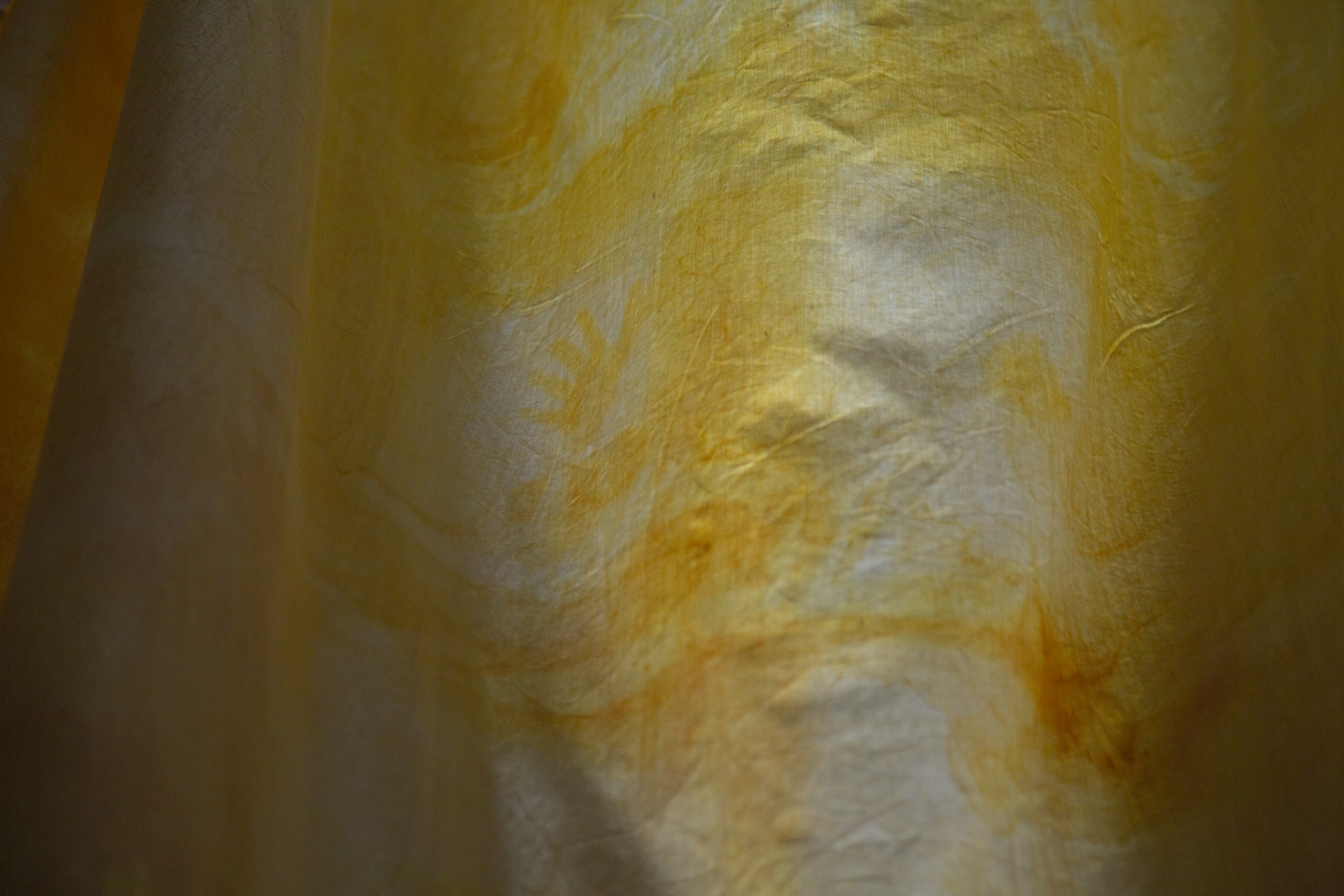
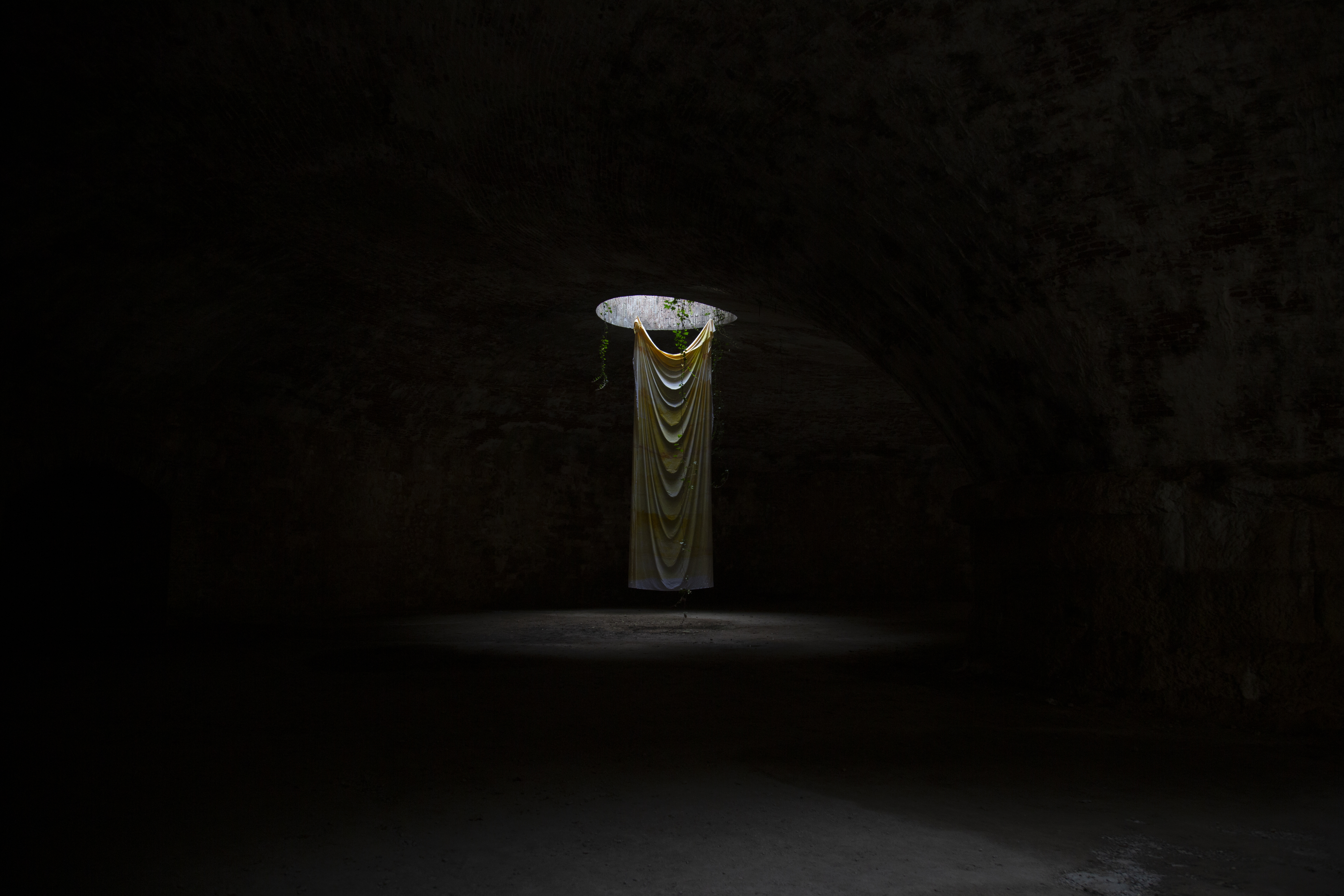
Cucurucucu, Lorena Bucur .
~ Non ti hanno visto
(They didn't see you)
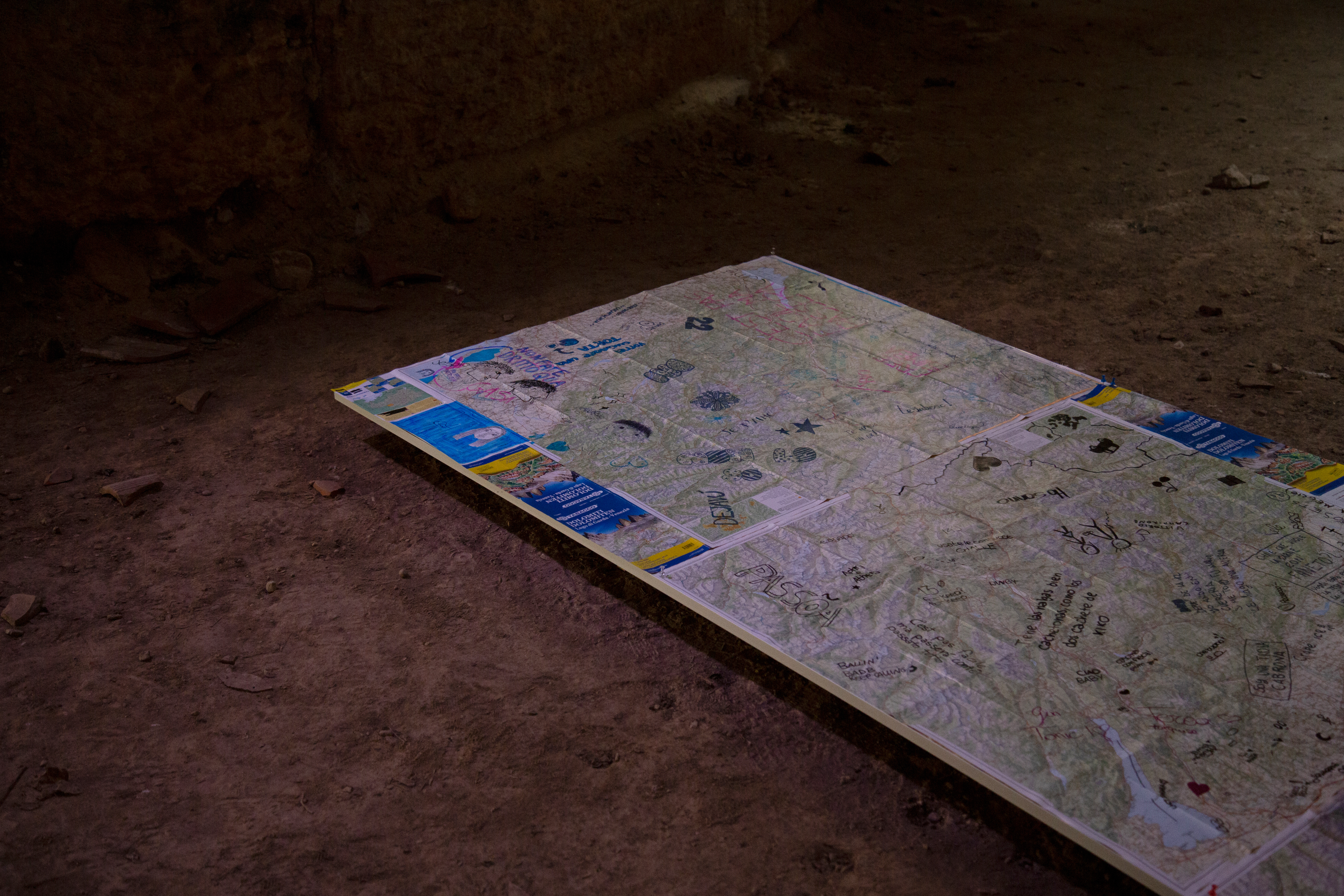
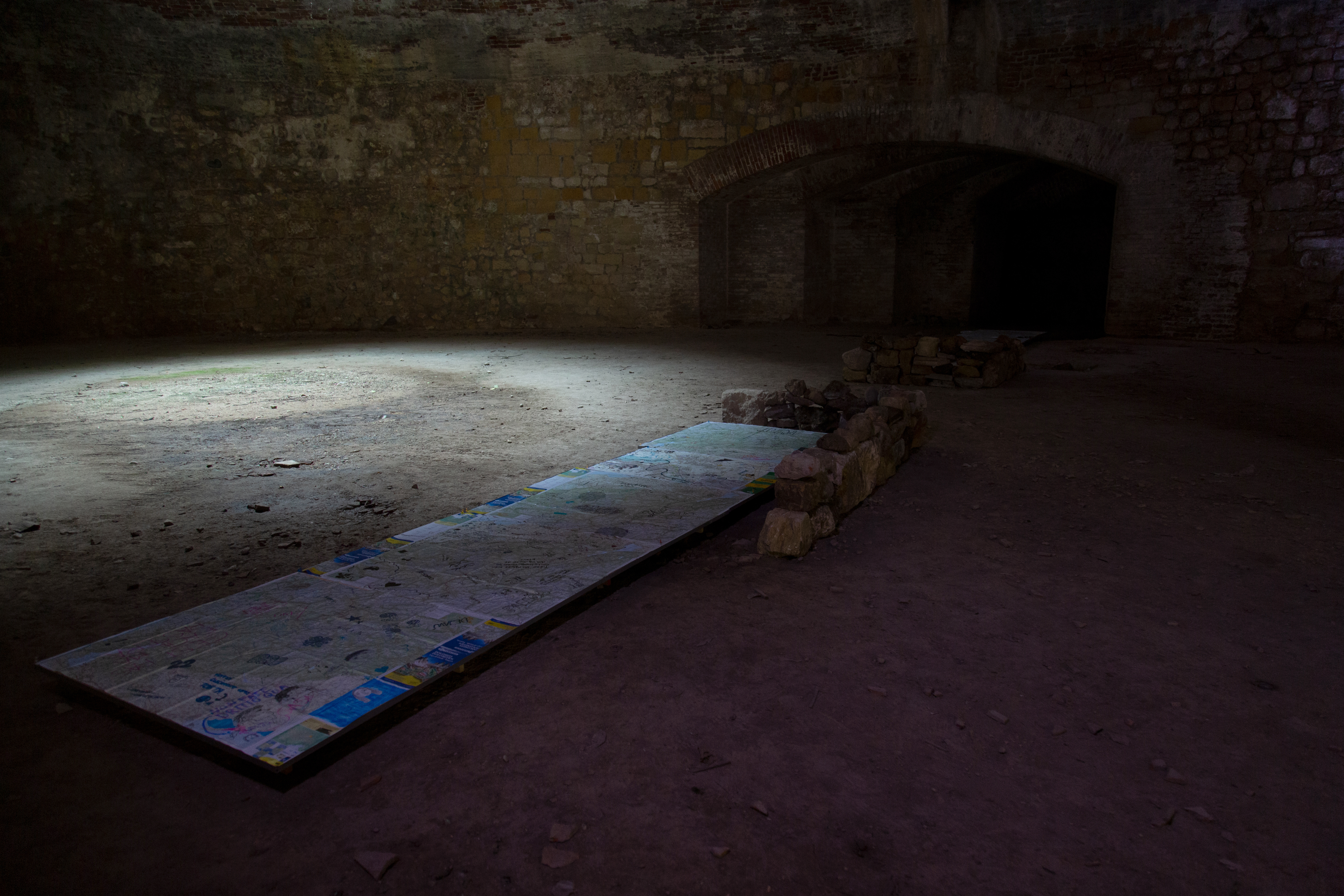
Veneto region and Dolomiti maps | 2025 Site specific installation in developed in occasion of
‘Autogeografie: tu fai le foto ma sei parte del paesaggio’
Curated by Thomas Ba.
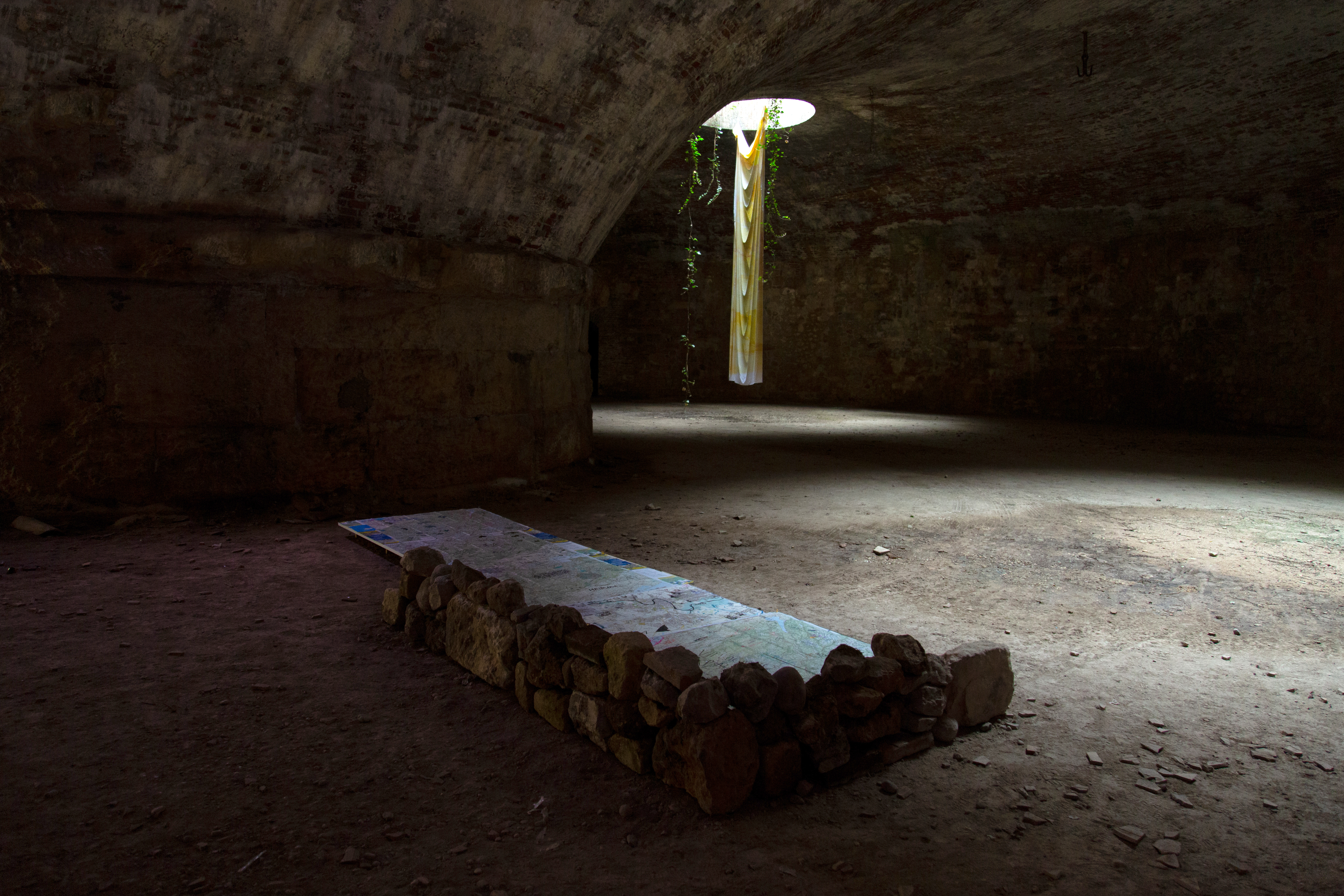
Autogeographies: you take photos but you are part of the landscape
Tracing a path, sitting on a low wall, walking the same road every day. The landscape is made up of experiences that are often trivial and imperceptible, but it takes on a precise form in the mind of the observer. It depends not only on “what” but above all on “how” we look, as John Wylie points out: “the landscape is not just something we see, it is also a way of seeing things, a particular way of looking at and imagining the world around us”. Anthropological studies, particularly those by Christopher Tilley, have shown that the landscape directly influences people and the culture that a community produces. In fact, in Iron Age civilisations, rivers, hills and mountains became points of reference with which to engage in dialogue and not just passive spatial elements. It is therefore a relationship of mutual exchange where two elements influence each other, building themselves up over time and evolving in response to each other's movements.

In February 1801, some citizens of Verona endured hardship and fatigue in order to persuade the French to spare [editor's note: the Rondella delle Boccare] from the destruction to which it had been condemned.
Autogeographies: you take photos but you are part of the landscape, develops through the dialogue between three fundamental components: the Rondella delle Boccare, the students of the Marco Polo Institute, and the artists Lorena Bucur and Davide Zulli. Built in the first half of the 16th century, the Rondella was originally designed as a defensive bastion where cannons could be positioned, but over the centuries it has been used for a wide variety of purposes (from a space for army horses to an air-raid shelter). As archaeologist Lanfranco Franzoni points out, the Rondella is such an important place for the city that in 1801 the population rallied to prevent its destruction. An often forgotten symbol of Verona, it is the spatial hub of this project. The students of the Marco Polo Institute took part in a course introducing them to contemporary art and the theme, reflecting on the urban landscape and the way it is represented and experienced (especially by them).
Through various workshops, they shared their perspective, which is that of those who experience the city and its contradictions every day. In her work with the students, Lorena Bucur explored the relationship between inside and outside. La Rondella, in fact, is an element that marked the boundary between the inside and outside of the city, a refuge that shelters from the outside world and at the same time divides it from it. Bucur uses the images produced by the students, both through the ancient method of printing with turmeric and with analogue photographs, to question the artist's external relationship with the city. The delicate and intimate images are a glimpse into life in Verona, while their editing and recomposition belong to an external gaze. Davide Zulli, on the other hand, has chosen to work on the map, a tool closely linked to the control and overdetermination of a territory.
Zulli wanted to use the map as a space where students could write whatever they wanted, freely and instinctively, as they would on city walls. The goal is twofold: to reverse the power relations between those who describe and those who are described; and to highlight the link between the individual and the landscape. In fact, there is a mechanism of identification that leads individuals to recognise themselves in the places they live, even when it comes to seemingly abstract geographical maps. Finally, the element of the dry stone wall recalls both an ancestral technique of creating arbitrary boundaries and the role of the Rondella in defining and delineating the limits of ancient Verona.
Student names:
BARTOLOZZI VALENTINA
BOHOTINEANU ERICA LUCIA
BULHAKOVA YULIIA
CAMPEDELLI ALESSIA
COVRE ARIANNA
DEGANI GIADA
DEL COLOMBO GAIA JOSSETTY
FASOLI ELISA
FIORIO ALESSIA
GALVAN SARA
GRIECO ANAIS
IMOLA CHIARA
KURUMBALAPITI ARACHIGE MADUSHI ANGELIKA
LARA FELIPE NAURIS NATIEL
LAVARINI SARA
LEDRO ELENA
MAZZI KAROLINE
PASSAIA ALESSANDRO
PAVAN MARIKA
PELANDA ESTHER MARIA
PICCHI MELISSA
PIETROBON EMANUELE
PINALI BEATRICE
SOGLIACCHI MARTINO
SQUARANTI NICOLE
TCHIENGANG NJANJIO LORENZO
ZAMPINI VITTORIO